
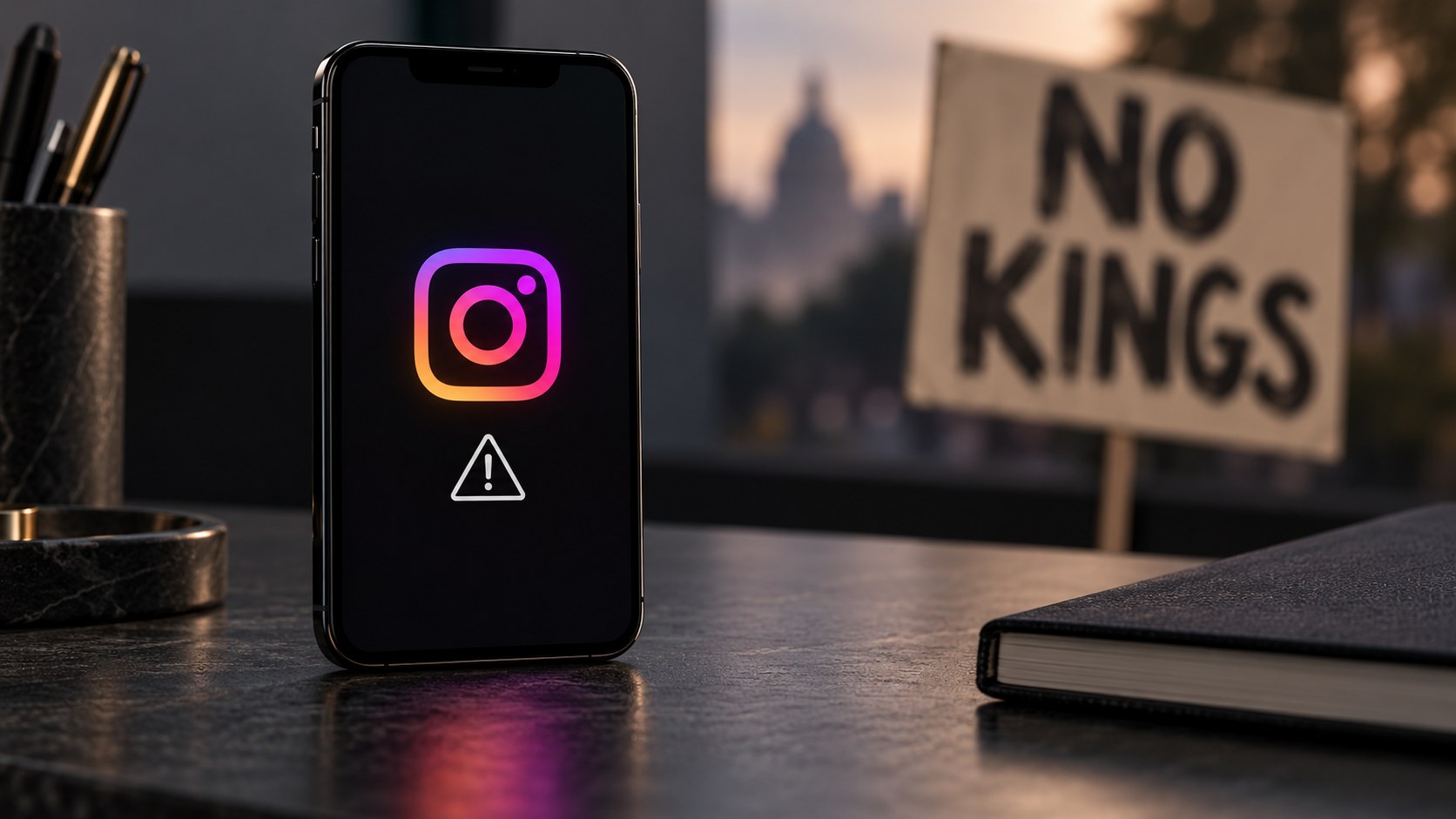
Meta says an AI tool using Anthropic's Claude triggered the mistaken suspension of the No Kings Coalition's Instagram account during nationwide demonstrations. The account is back, but organizers are still demanding answers about why they lost a major communication channel while trying to get people to vote early.
The explanation has changed since the disruption on October 17. Meta initially pointed to high-frequency posting, sharing or commenting. Its follow-up focused instead on a burst of activity reading profiles, posts and hashtags that its security systems apparently mistook for automated bot traffic.
Meta points to Claude, and its own security system
Bloomberg reported Meta's attribution to Claude in its latest account of the incident. CryptoBriefing also reported that Meta linked the reading requests to a Claude tool being used by the coalition.
That is a different explanation from Claude deciding to remove political speech. In Meta's account, the tool generated activity that tripped Meta's protections; Meta's system took the account offline. The attribution to Claude remains the company's explanation, rather than a finding from an independent technical investigation.
Meta communications officer Andy Stone acknowledged the change in an October 18 update, saying engineers found that the spike behind the incorrect enforcement was primarily in the account's reading behavior.
His fuller explanation, reported by the Guardian, described high-volume reading in intense bursts. Stone said:
This activity caused our automated protections to incorrectly take the No Kings Instagram account offline. An automated re-review of the removal action an hour later recognized that shouldn’t have happened and restored the account.
The restoration did not immediately solve everything. Stone said it took additional time to straighten out administrators' access, and repeated Meta's apology.
Organizers say a few posts became a major disruption
The suspension hit during No Kings: Vote Early, a nationwide push ahead of the November midterm elections. The Independent reported that nearly 3,000 events were taking place across all 50 states and Washington, D.C.
Organizers challenged Meta's first explanation because they said they had posted only a handful of times and livestreamed to thousands of people. That objection helps explain why the distinction between posting and reading matters: the activity Meta now identifies was different from the behavior it initially described.
Indivisible cofounder and No Kings organizer Ezra Levin told MeidasTouch that the page was inaccessible for about an hour and a half during the mobilization, according to the Independent. Administrators remained locked out longer, leaving them unable to update supporters even after the page became visible again.
For organizers coordinating events as they happened, those were two separate problems. People needed to find the page, and the people running it needed to be able to post.
The coalition's response was blunt. In an October 18 Instagram statement quoted by the Guardian, it said:
We have regained access to our accounts, but Meta still owes us an explanation. Restricting communications about voting in the middle of an election is unacceptable.
Restoring the page has not ended the argument
The incident has drawn political scrutiny, too. Connecticut Sen. Chris Murphy called for an investigation, questioning why Meta had not been prepared for a major day of anti-Trump demonstrations. He framed the episode as a problem with the company's influence over political communication, even if its account of an error was accurate.
The organizers' concerns extend beyond whether the page eventually came back. Their objection is that an account used to coordinate civic activity disappeared during the event itself, when access mattered most.
Meta has acknowledged that the enforcement was wrong and says the account is functioning again. Its revised explanation moves the focus from how often organizers posted to what a connected AI tool was reading. What it has not done is make the interruption any less consequential for the people who were relying on that account while their events were underway.