
Marco Rubio used a CIA assessment to write a more forceful memo about Jensen Huang's relationship with a suspected Chinese intelligence asset, according to a new Washington Post report. The account places Rubio at the start of the sequence that ended with Huang leaving Nvidia after 33 years as chief executive.
The reported intervention came as Huang was winning President Donald Trump's support for some chip sales to China, frustrating national security officials who wanted tighter restrictions. The espionage allegation remains unsettled: the Justice Department says it has reached no conclusion about the woman's affiliation with Beijing.
The November 13 report cites a person familiar with the matter who said Rubio recast the CIA's reporting in his own, more assertive language. That describes a separate memo based on agency intelligence, rather than an announced revision to the CIA's original assessment.
From intercepted communications to a classified memo
A separate CNN investigation traced the warning to communications intercepted in the spring involving an executive at Megaspeed, a company under investigation over possible technology diversions to China, and an American.
The American's identity was initially concealed in intelligence reporting. Officials subsequently requested its disclosure, revealing Huang's name, sources told the network. Such requests generally require senior approval and a review process, with the resulting intelligence tightly restricted.
Rubio, who serves as secretary of state and national security adviser, then circulated a classified summary to a small group of senior officials. That account says the memo wasn't written specifically for Trump, although the president was briefed several times, including verbally by Rubio in May.
The woman was Alice Huang, a former Megaspeed executive. The intelligence community is still examining her relationship with the Chinese government, and officials disagree over the strength of the evidence that she was recruited to spy.
Attorney General Todd Blanche said on November 12:
There are still no conclusions reached by the Department of Justice, or by me, or by Director Patel around who she is or is not.
Huang's influence over China policy was already contested
The Washington Post described a long-running fight over Huang's access to Trump. Two former officials said some national security officials resented his influence, while a former chips-policy official said opponents wanted to weaken his sway over the president.
Huang argued that keeping Chinese customers on American technology would benefit the United States. His critics saw advanced chips as an asset that could strengthen a military and technological rival.
Asked at this week's Group of Seven gathering whether the spying allegations changed his approach to AI negotiations with Beijing, Rubio said:
The Chinese system is always going to act in the best interest of the Chinese system, and the United States will always act in the best interest of the United States. I work for the American people.
He repeatedly declined to answer questions about his role in alerting the White House to the relationship. The CIA declined the newspaper's request for comment, while Nvidia and the White House didn't respond to its requests.
Congress presses for tighter chip controls
As previously reported by Apex in the coverage linked above, Huang resigned on November 12 as Nvidia's president, chief executive and a director. Colette Kress became interim CEO while retaining her finance responsibilities, and the board began searching for a permanent successor.
Lawmakers are pressing ahead. In a November 12 statement, House China committee chairman John Moolenaar urged the company's next leadership to prioritize national security and called for bipartisan export-control legislation in the year-end defense bill.
His committee, alongside the House Foreign Affairs and Intelligence committees, also requested appearances by Huang, Nvidia general counsel Tim Teter and Commerce official Jeffrey Kessler. The chairmen identified chip-export oversight, anti-smuggling measures and remote access to advanced processors among their concerns.
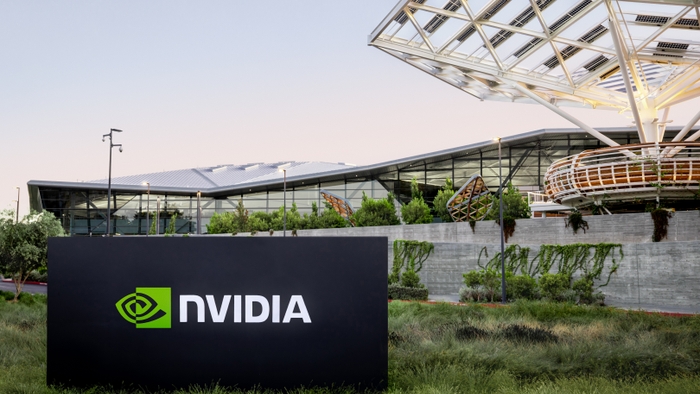
Image: Nvidia sign outside the company's Santa Clara headquarters. File photo: Nvidia.