

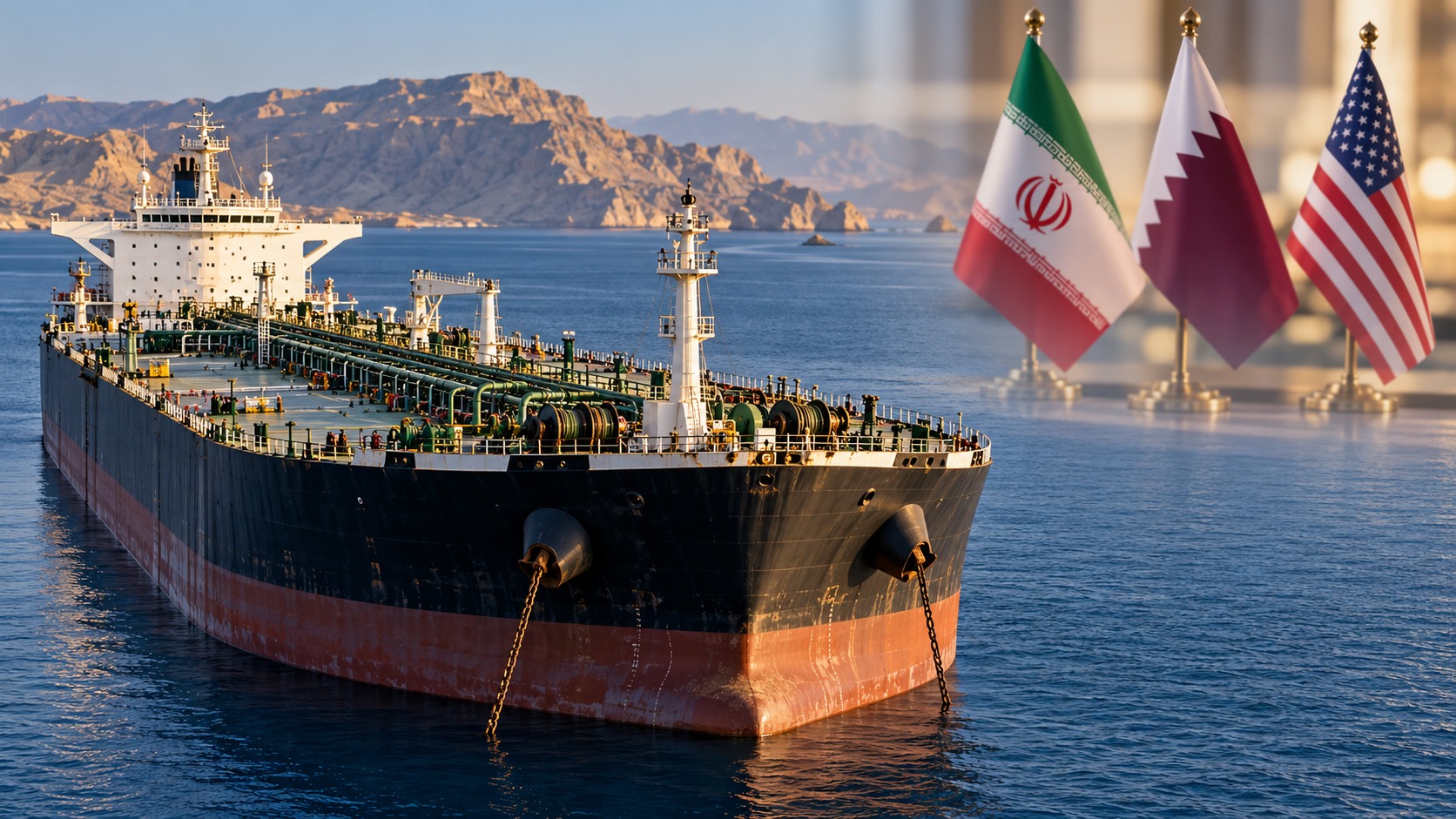
Iran says it could reopen the Strait of Hormuz within two days if the United States meets its conditions, as Qatar mediates efforts to prevent another round of war. Tehran says it is still waiting for Washington's response.
The 48-hour offer is a proposed timetable for putting a deal into practice. It isn't a countdown to an agreed reopening, and the talks taking place through Qatar remain indirect.
Foreign Minister Abbas Araghchi said Iran had shortened its original seven-day plan after discussions with Qatari mediators. In a Saturday interview with Al Jazeera, he explained:
The Qatari side proposed shortening the implementation period of the Iranian proposal to five days. We have reached a proposal at this stage that reduces the implementation period to two days.
A fresh account from Iran's parliament on Sunday set out the order Tehran wants those steps to follow. Hassan Ghashghavi, spokesman for the National Security and Foreign Policy Commission, said Iran's seven conditions would be fulfilled on the first day and the strait would reopen on the second.
He said the process could take two or three days if Washington responds positively, according to West Asia News Agency's report. His comments followed Araghchi's briefing to the parliamentary commission.
What Iran wants before ships return
Araghchi's demands include lifting sanctions imposed after the collapse of the June understanding with Washington and reducing the U.S. military presence in the region.
He also wants oil waivers restored and Iran's frozen funds released, including money held in Qatar. The network's Tehran correspondent, Resul Serdar Atas, put the funds held there at $6 billion.
Iran is seeking recognition of shipping routes through Hormuz that it has discussed with Oman, along with the closure of other routes. Its proposal therefore concerns access on terms negotiated with Tehran, rather than an unconditional return to the shipping arrangements that existed before the war.
Security chief Mohsen Rezaei has separately called for an end to the U.S. naval blockade of Iranian ports and fighting on regional fronts, including Lebanon. He told state television on Saturday night that normal transit would depend on Washington taking steps toward Iran's conditions.
Doha is carrying messages between the sides
Araghchi said on Sunday that his deputy had traveled to Qatar after Qatari officials held consultations in Tehran and returned to Doha. The deputy was expected back in Iran later on Sunday.
Iranian state broadcaster Press TV quoted Araghchi saying no meeting with the American delegation had taken place or been planned. The discussions were being conducted through intermediaries.
He also made clear that the contacts had not yet produced a deal:
Whether we reach an agreement or not depends on answers to many questions that have yet to be provided.
The foreign minister said Iran would keep pursuing diplomacy while remaining prepared for other options, according to the broadcaster's Sunday account.
On the U.S. side, President Donald Trump said on Saturday that talks were going fine, but called Iran's authorities unreliable. He also said the United States still had one or two Iranian sites to take care of, keeping the threat of further strikes in the background.
Secretary of State Marco Rubio said on Saturday that Trump had not decided whether to resume military action. He said he did not know whether there was a specific deadline for the Qatar-led discussions.
Negar Mortazavi, a senior fellow at the Center for International Policy, told Al Jazeera that Iran wants concessions while Washington wants progress on the nuclear program first. That leaves each side pressing the other to move before it gives up its own bargaining power.
Iran's Foreign Ministry is scheduled to hold its weekly press briefing on Monday, November 2. Spokesman Esmail Baghaei is due to take questions from domestic and foreign journalists, according to WANA's announcement.