

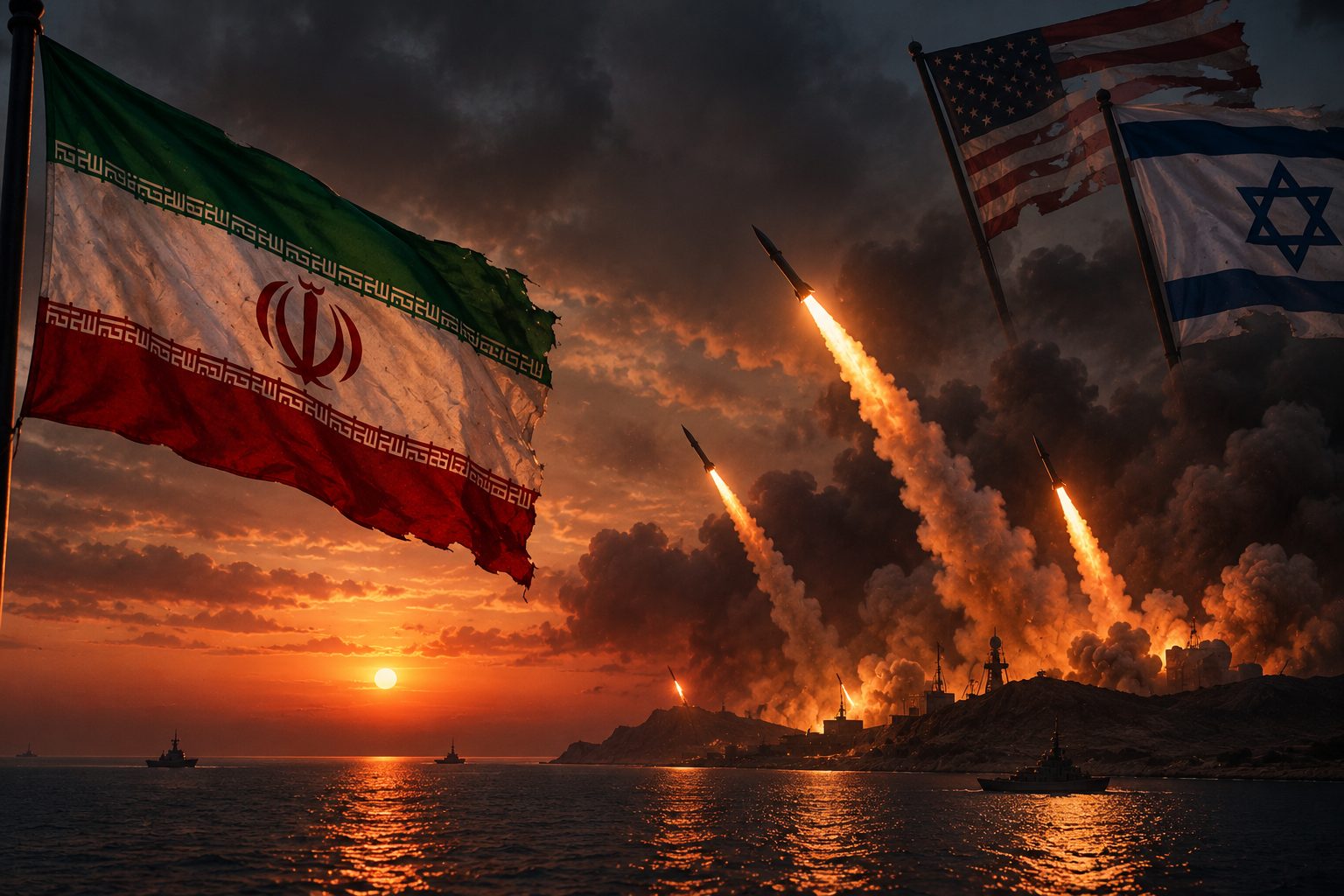
Iran could strike back at the United States and Israel on Monday night after American forces attacked the Konarak Naval Base, raising fears of renewed fighting across the Middle East.
Al Jazeera reported that two Iranian troops were injured at the military installation in Sistan and Baluchestan, along Iran's southeastern coastline.
It was Washington's first reported attack on Iranian territory in almost seven weeks. Retaliation is being anticipated, but neither its timing nor its targets have been confirmed.
Iran faces new military pressure as oil prices surge
The reported objective was a 35mm naval cannon inside the Konarak military compound. That is a specific target, but the political fallout could extend far beyond the damaged equipment.
Fox News correspondent reported that authorities in Tehran were preparing for hostilities with Washington to intensify again. The report gave no further details about the soldiers' injuries or possible damage to the base.
Oil traders were quick to react. Brent crude climbed past $110 a barrel, reaching its highest level since May 19, while the US benchmark rose to $103.
Those prices matter because new fighting could disrupt tanker traffic and raise transportation costs for countries that depend on Gulf energy supplies.
At the same time, Qatar is trying to keep its energy discussions with Iran moving. Energy Minister Saad Sherida al-Kaabi met acting Iranian Petroleum Minister Hamid Bovard in Doha to discuss cooperation and the relationship between their energy sectors.
The meeting followed Monday's comments from Qatar's deputy prime minister, Sheikh Saoud, about the Iranian strike on Ras Laffan in March.
The industrial complex is a major center for liquefied natural gas production. Sheikh Saoud said Qatar had not expected that attack, although officials from both sides had since developed a shared understanding.
Strait of Hormuz crisis leaves thousands of sailors trapped
The shipping crisis is serious, even without another exchange of fire. Around 6,000 sailors remain unable to leave the area near the Strait of Hormuz, according to International Maritime Organization chief Arsenio Dominguez.
He said on Sunday that attacks on merchant vessels and restrictions affecting maritime movement had created an exceptionally dangerous situation.
The Financial Times reported that 24 vessels had been attacked across roughly two weeks. Dominguez described shipping as caught between two blockades and said crew members had died in the violence. He urged operators to avoid sending ships through the strait until their safety could be guaranteed, rather than gamble with lives at sea.
There is also a dispute over emergency radio communications. In a letter sent to the IMO on October 9, Iran accused US forces in the Persian Gulf of misusing VHF Channel 16, the international frequency reserved for maritime distress calls and safety messages.
Channel 16 is meant to stay available for civilian vessels calling urgently for help, not for military arguments over the airwaves.
Tehran alleged that American personnel repeatedly occupied the channel for extended broadcasts, spoke to Iranian crews in Persian, directed insults and threats at them, and sometimes ordered sailors to abandon their vessels. Those accusations remain allegations in Iran's letter, not independently established findings.