

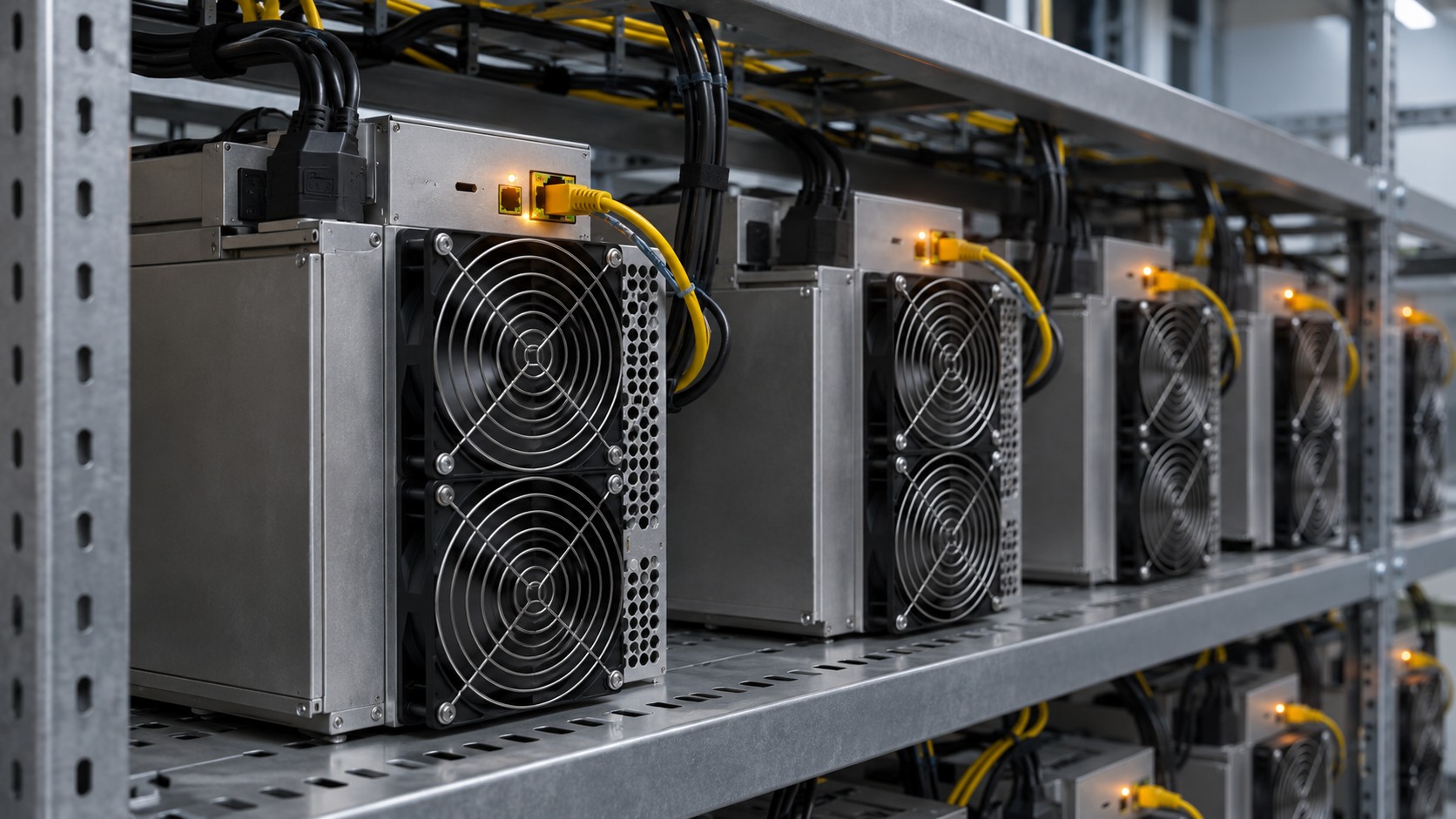
Hackers have reportedly hijacked about 64,000 Bitcoin mining machines and redirected an estimated 13 exahashes per second of computing power to OCEAN, aiming the rewards at a single Bitcoin address. Mining host CoreX Hosting warned that machines were being pointed at the pool without their owners' authorization.
By November 15, activity associated with that address had fallen sharply. OCEAN's public account page showed no payouts and no blocks found, although some workers were still submitting mining work. The reported machine count remains an estimate, rather than an independently verified inventory of physical devices.
CoreX's original alert, posted on November 15, identified the destination address and warned:
Just a heads up, there is a big miner hack going on as we speak.
Mining power was sent to a different destination
The roughly 64,000-machine and 13 EH/s estimates were reported by Crypto Briefing, which said the incident began late on November 14 in the United States. That falls on November 15 in UTC.
Its account described a sharp increase in OCEAN's total hashrate, briefly approaching 50 EH/s before settling around 40 EH/s. The redirected machines were configured to contribute work under the same payout address, rather than their owners' intended settings.
Hashrate measures the speed at which mining equipment performs calculations in the search for valid Bitcoin blocks. Thirteen exahashes per second means about 13 quintillion calculations a second. Moving that work to another payout identity changes who stands to receive the resulting rewards.
The attack's access route and the identities of those responsible remain unconfirmed. No independently verified dollar estimate of the affected operators' lost revenue has been established.
Pool records show a much smaller remaining footprint
The OCEAN account identified in the warning showed a three-hour average near 15 petahashes per second when checked. That is well below the reported 13-exahash diversion. Its 24-hour average was 1.41 EH/s, reflecting the earlier activity across a longer window.
The page listed 18 workers that had submitted a share in the previous 10 minutes. It also explicitly says workers are not necessarily individual machines, a distinction that matters when estimating the number of devices affected.
The account's lifetime earnings were zero, its latest-payout section had no entries and its block counter was zero. Shares remained in the pool's reward window. But the page still displayed an estimated payout of about 0.0807 BTC if the pool found its next block. That is a conditional reward estimate, rather than money already received.
Why a pool-setting change matters
OCEAN's own documentation explains that miners use a Bitcoin address as their worker identity. The pool URL determines where their equipment submits work, while that identity determines the account associated with it.
That makes an unauthorized configuration change financially significant even when the machines keep running. The equipment can continue consuming electricity and doing useful mining work while the contribution is credited to a different address.
The pool describes its payment system this way:
OCEAN constructs blocks so that miners are paid in the generation transaction whenever possible. This means the Bitcoin network is paying miners directly with OCEAN transparently ensuring the rewards are split correctly.
Its TIDES reward system allocates rewards according to contributed work in a rolling share window. That helps explain why the account can show an estimated future reward even though no payment has yet appeared.
The reported incident concerns control of mining equipment and its pool settings. It doesn't establish that attackers stole coins from the operators' existing wallets. The immediate loss for affected owners was the opportunity to direct their machines' work toward their own mining income while the unauthorized settings were in place.