
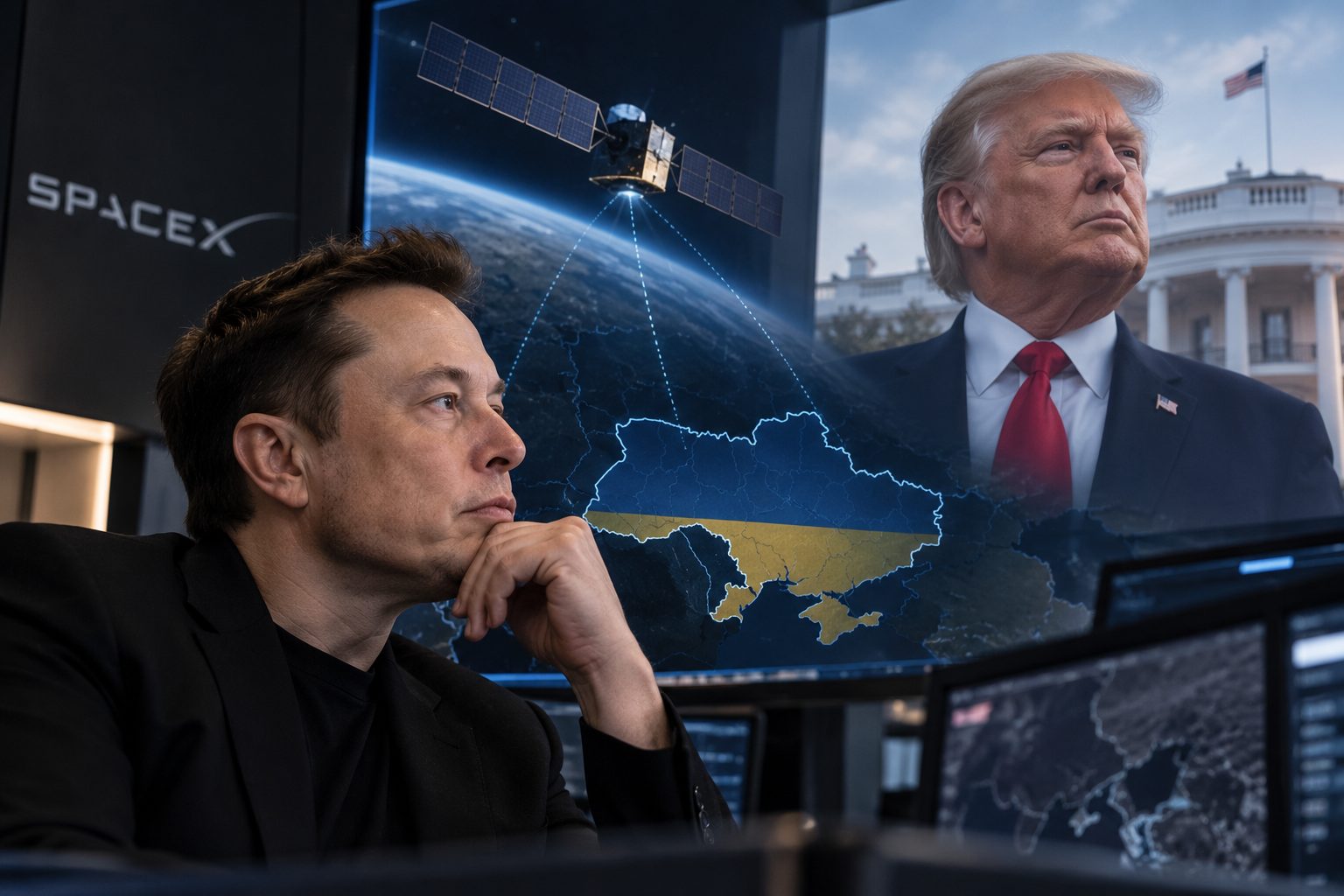
Elon Musk says Trump and the U.S. military, not SpaceX, have the final say over restrictions on Ukraine’s military-grade Starshield network.
Ukrainian officials had earlier said that satellite internet terminals began slowing down without warning, throwing some military missions into trouble just as Russia stepped up attacks on the country's power system. Washington insisted it wasn't behind the reported limits, but Kyiv suspected there's more to the story.
Elon Musk says the military decides how Starshield operates
“Starshield systems are owned and controlled by the U.S. government. Any limits on speed or usage are decided by the US military and ultimately POTUS,” Elon wrote on X Wednesday night, clarifying the confusion.
Ukraine's complaint came from Serhii Beskrestnov, a defense technology adviser to President Volodymyr Zelenskyy. On Telegram, Serhii said SpaceX had imposed a speed cap on Starlink terminals in motion and hadn't told Ukrainian defense forces beforehand.
He said the restriction also affected Starshield. Some operations were interrupted, although he didn't provide a complete breakdown of the missions involved.
And this wasn't just about soldiers losing an internet connection. Ukraine uses Starlink to control interceptor drones that chase down Russia's Shahed attack drones. Serhii called that setup the country's most effective answer to those incoming weapons.
Slower connections during a mission can become a battlefield problem, not merely a technical annoyance. A senior U.S. official had allegedly denied that the Trump administration had ordered the alleged service limits, per Axios.
American officials attributed the trouble to a technical malfunction. Ukrainian officials remained doubtful, reportedly interpreting the incident as a possible warning from Washington.
Kyiv also pointed out that the U.S. had shared military intelligence alerts with Ukraine for years. Neither the suspicion of political pressure nor a deliberate government restriction was established.
Zelenskyy questions Washington as SpaceX's defense business grows
The names Starlink and Starshield sound interchangeable, but they serve different customers. Starlink is SpaceX's satellite internet service for households, companies and defense users, especially in places where conventional connections are hard to get.
SpaceX says it reaches more than 160 countries, territories and markets, with home plans starting at $55 a month and download speeds above 400 megabits per second in most locations.
Starshield is built specifically for government missions. Its work includes Earth observation, encrypted communications and hosted payloads, meaning specialized customer equipment carried aboard satellites. It uses tougher security protections for classified information, dedicated terminals and laser links between spacecraft.
Despite those differences though, it still draws on Starlink's huge satellite network.
There is big money behind the military version.
SpaceX reported more than $6 billion in multiyear U.S. government Starshield contracts, mainly from two Space Force deals covering low-Earth-orbit communications and sensing satellites.
Meanwhile, during a Piers Morgan interview released late Wednesday, Zelenskyy discussed his disappointment with Trump's dealings with Vladimir Putin, the attacks on Ukrainian electricity facilities and the apparent communications slowdown.
“Really, yes,” Zelenskyy answered when asked whether he felt betrayed. But he also made clear that keeping Ukraine alive and maintaining its relationship with the U.S. mattered more than how he personally felt.
Zelenskyy said Ukraine had honored a proposed energy ceasefire for three days, neither striking back nor launching attacks. Russia then hit the country's energy infrastructure with a massive assault involving roughly 40 ballistic missiles, he said.
The Ukrainian president had warned American officials that Russia wouldn't keep the deal. He called the reported Starlink shutdown “absolutely crazy,” saying it was no way for partners to treat each other.