
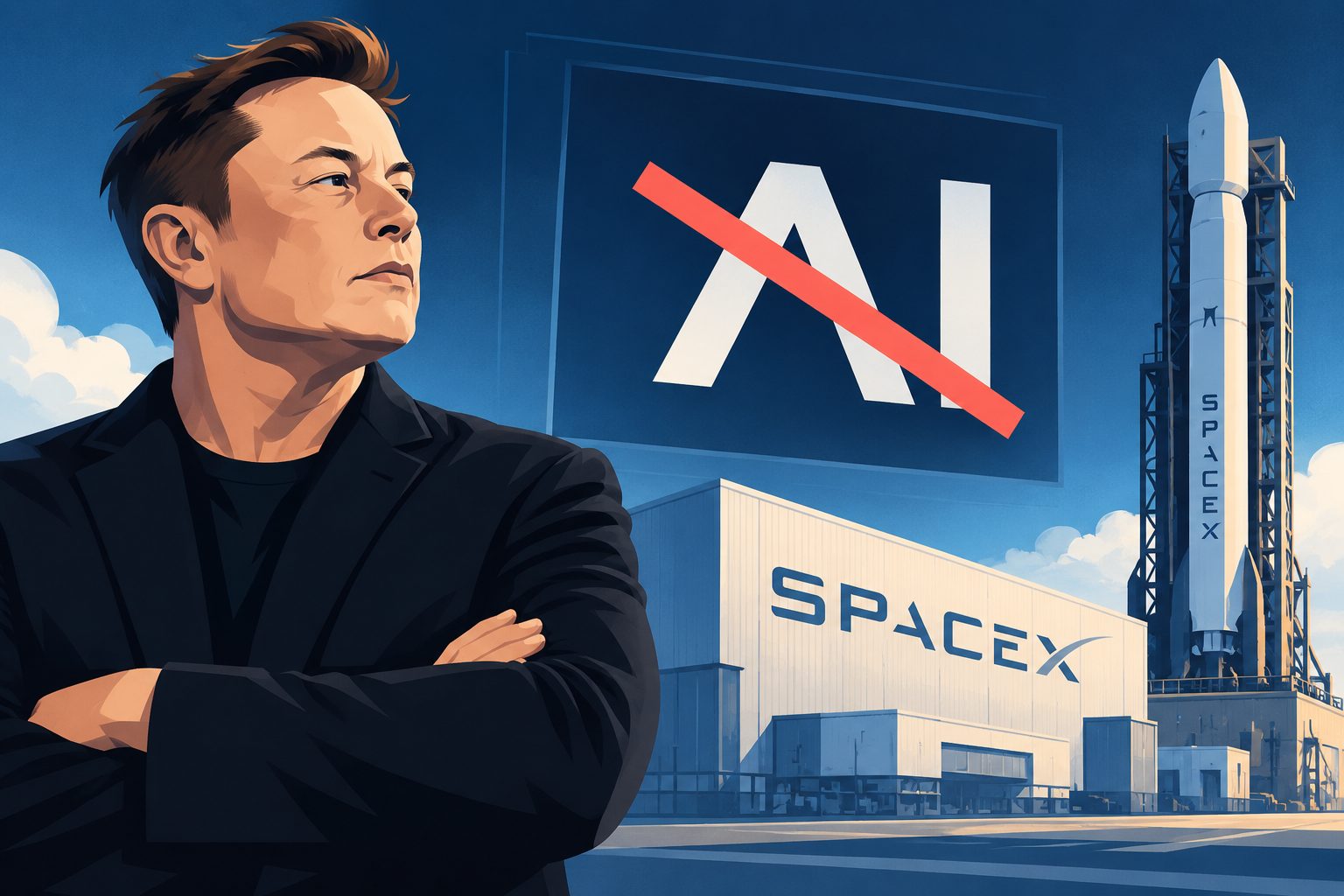
Elon Musk is preparing to strip the “AI” label from SpaceXAI, saying the company will be renamed SpaceXSI. Elon confirmed the move on Sunday after an X user floated “SpaceXSI” as the replacement. He gave no date, rollout plan, or explanation beyond making clear that “AI” is out and “SI” is the preferred term.
Trump’s “super intelligence” language moves from Washington into Musk’s branding
President Donald Trump signed an executive order on September 29 telling the federal government to use “Super Intelligence” and “SI” instead of “Artificial Intelligence” and “AI” when the law allows it. The order keeps the same technology inside the existing legal definition of artificial intelligence, but changes the vocabulary agencies are expected to use across websites, reports, policy papers, and official communications.
The directive also tells the White House science and technology adviser to send lawmakers a proposal within 60 days that would create a federal definition for “Super Intelligence” and “SI.” Older regulations, contracts, grants, and archived government documents do not need to be rewritten, meaning the terminology shift is mainly forward-looking.
The name SpaceXSI that Elon plans to introduce joins a larger political push to remove the term “artificial intelligence” from all official discourse. The tech remains what it is regardless of a change in name, but it would get the spin that Trump prefers.
Washington is also building a “Super Intelligence Force,” chaired by Director of National Intelligence Jay Clayton, who becomes the administration’s coordinator on the issue. The group has 120 days to study the dangers and the strategic upside tied to advanced AI systems, then spell out where federal responsibility should begin and end.
The task force puts industry first while Washington studies the guardrails
Clayton said the administration’s concern is keeping the United States ahead in super intelligence while protecting American interests. His argument is straightforward: falling behind creates known and unknown dangers, especially when rival countries are developing the same technology. Leading, in his view, gives Washington more room to respond before those threats become harder to control.
The task force follows a White House meeting Trump held with AI executives, including OpenAI President Greg Brockman, Anthropic CEO Dario Amodei, and Nvidia CEO Jensen Huang. Industry representatives backed voluntary principles covering internal monitoring of model development, independent outside reviews, and board-level reporting on safety work.
Trump described the voluntary route as preferable to heavy restrictions, saying he would not slow a technology he expects to exceed the industrial revolution in scale. The administration is still leaving companies as the main operators responsible for handling technical risk, while the task force works alongside them to map threats, opportunities, and possible policy gaps.
Clayton said future safeguards could emerge through talks between regulators and companies, similar to how financial risk frameworks have been shaped with the Federal Reserve and Securities and Exchange Commission. The group will also review existing law and consider what additional steps Congress could take as the government decides how far “SI” should move beyond branding and into policy.