
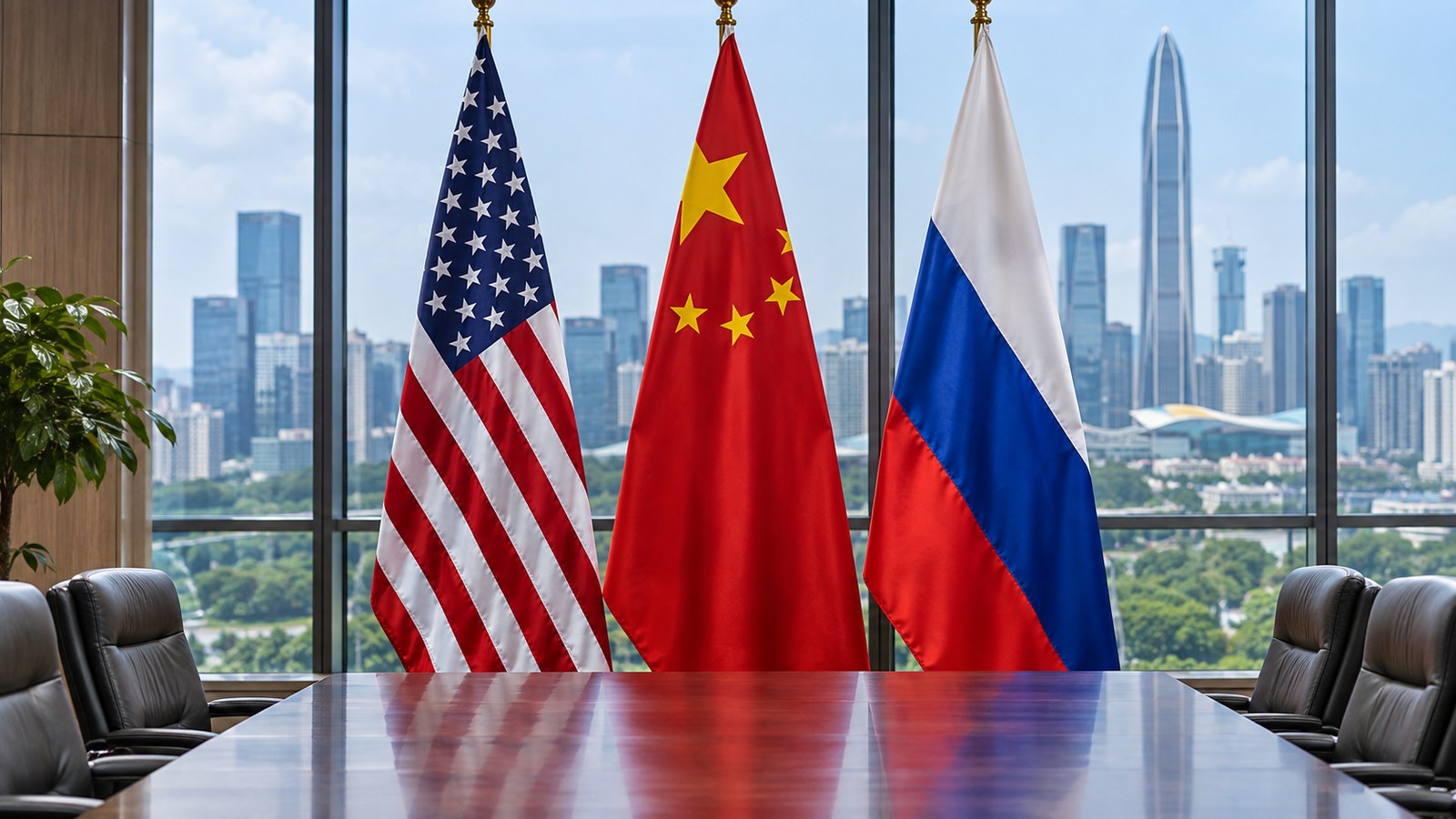
China has confirmed that President Xi Jinping will meet Donald Trump and Vladimir Putin in Shenzhen on November 19, setting a date for the three leaders' first trilateral summit as Washington pushes for talks on reducing nuclear arsenals.
The meeting will take place on Thursday alongside the Asia-Pacific Economic Cooperation gathering. The White House and Kremlin had already confirmed the planned three-way encounter; Beijing's announcement on Monday put the host country's backing and the date on the record.
Beijing puts strategic stability at the center
Foreign Ministry spokesperson Mao Ning described the summit as groundbreaking at her November 16 briefing. She said:
This will be the first ever face-to-face meeting between the Chinese, Russian and U.S. heads of state. The three presidents will have an in-depth exchange of views on safeguarding world peace and enabling strategic stability in major-country relations.
Mao pointed to the three countries' positions as founding members of the United Nations and permanent members of its Security Council. She said they had a responsibility to cooperate on global challenges, manage their differences and keep relations stable.
Beijing was less specific about individual negotiating topics. Asked directly about U.S. plans to discuss nuclear arms control and Iran, Mao said the leaders would exchange views on important issues affecting global peace and that further information would be released.
A nuclear deal faces a difficult starting point
Washington wants nuclear disarmament to be the focus. As previously reported by Apex, U.S. officials described the summit as an initial conversation and said they did not expect the leaders to reach a concrete agreement at this meeting.
China has long resisted direct nuclear negotiations with Washington, arguing that the United States and Russia should first address their much larger arsenals. Bringing all three presidents to the same table therefore leaves substantial disagreements about how reductions should begin.
The talks also come after the expiration of New START, the last nuclear arms-control treaty between Washington and Moscow. The treaty expired on February 5 after 15 years in force, according to the Arms Control Association.
It had capped deployed strategic nuclear weapons and delivery systems and provided procedures for verification. Its expiration adds urgency to the discussion of what arrangements, if any, could follow.
The UN offers help with any disarmament effort
UN Secretary-General Antonio Guterres said on Monday that the organization was ready to support a denuclearization effort emerging from the summit. He made the comments in Manila, where he was attending the Association of Southeast Asian Nations gathering, according to Reuters.
Guterres said the UN would be prepared to engage fully and help such a program succeed. His offer puts UN support behind any subsequent effort, while the three governments still have to decide what they can agree on.
He also called for negotiations to end the conflict involving the United States and Iran:
What we need in relation to the situation in the Middle East, and in particular in relation to Iran and the United States, is a serious diplomatic process of negotiation to end this neither peace nor war that you are living in with devastating consequences to the global economy.
Iran is on the U.S. agenda; Ukraine is not
U.S. officials have said Trump expects to raise Iran with Xi and Putin, but does not intend to discuss Russia's war in Ukraine during the trilateral session.
The summit is scheduled as the final event of Trump's Asia trip. Before it, Trump and Xi are due to hold a bilateral meeting and working lunch, with implementation of their trade agreement among the priorities. No separate Trump-Putin meeting is planned.
Trump's itinerary begins in the Philippines before continuing to Shenzhen. The China visit will be his second of the year and his third meeting with Xi, according to the U.S. briefing.