

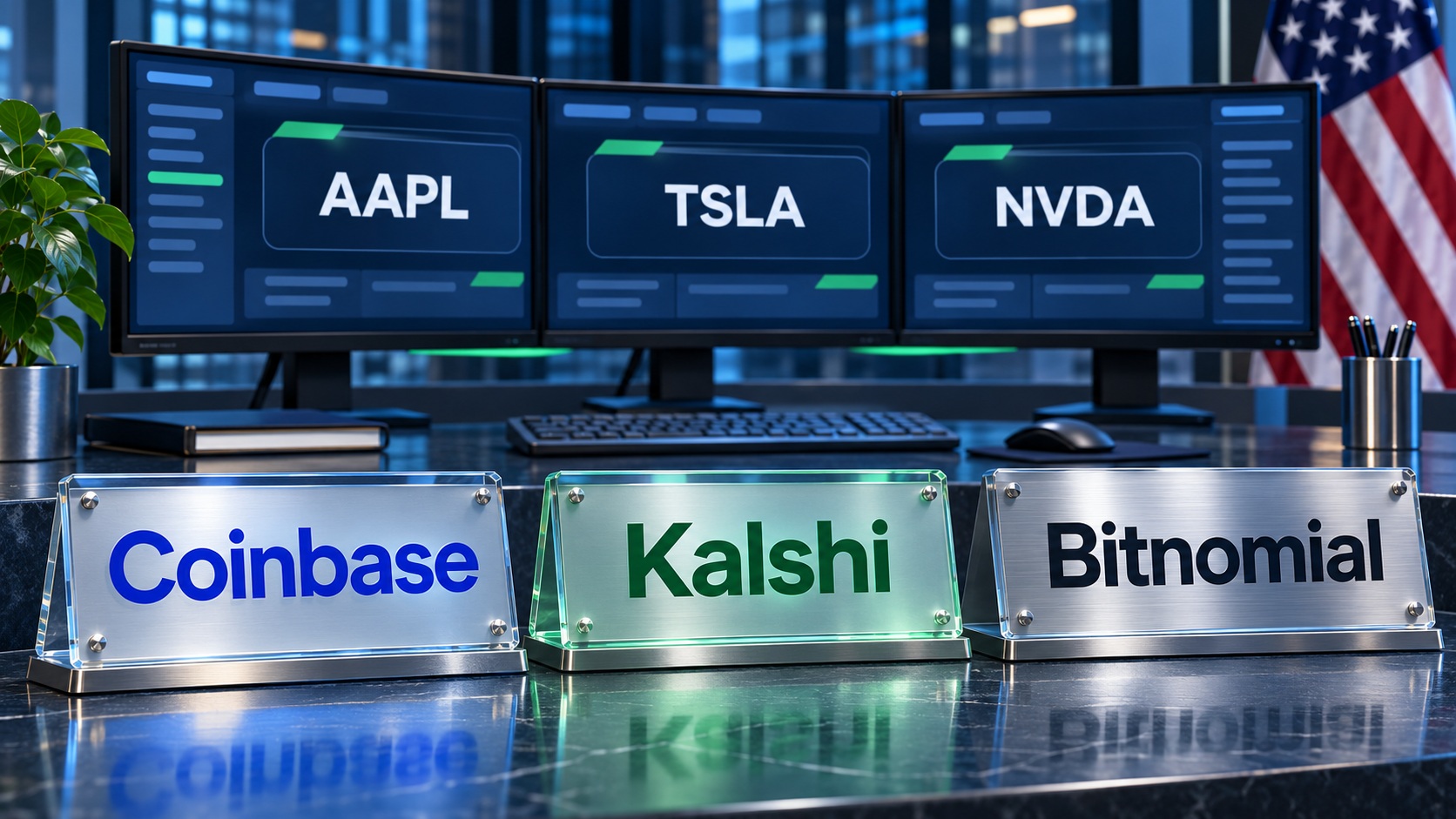
The CFTC has cleared perpetual futures tied to individual stocks for trading on regulated U.S. exchanges, giving a product familiar to crypto traders a route into America's equity derivatives market. Coinbase, Kalshi and Bitnomial have already filed plans to offer versions of the contracts.
The approval is for security futures under a joint regulatory framework. It isn't blanket permission to list a contract on every company: the underlying securities must qualify, and the exchanges must meet registration and product requirements. The filings also leave a gap between regulatory clearance and the first trade.
Stock perps get a U.S. regulatory opening
Chairman Michael Selig announced the change on November 3 in a statement:
"Today, perpetual futures contracts on individual equity securities (the 'Equity Perps') can begin trading for the first time on CFTC-registered exchanges."
The contracts were deemed approved under Regulation 40.3 and classified as security futures products. That puts them under the Commodity Exchange Act, federal securities laws and oversight by both the CFTC and SEC. Eligible venues are designated contract markets also notice-registered with the SEC as national securities exchanges for security futures trading.
Unlike a conventional future with a fixed expiration date, a perp can remain open without being rolled into a new contract. Funding payments between buyers and sellers help keep its price tied to the underlying stock. Traders get exposure to price movements while taking on the margin and funding obligations that come with the contract.
Three exchanges have their plans on file
Coinbase Derivatives' September 18 submission says it intends to list its equity perpetual contracts shortly after approval, pending any additional regulatory permissions. Its design calculates funding hourly, with a cap of plus or minus 0.10% per hour. Longs pay shorts when the contract trades above the reference stock price; the direction reverses when it trades below.
Kalshi filed the same day with a schedule of 58 contracts. The list covers 55 stocks, including Apple, Tesla, Nvidia and Microsoft, along with Alibaba's American depositary shares and the QQQ and SPY exchange-traded funds. The company said it intended to list shortly following approval.
Bitnomial's September 18 filing seeks approval for cash-settled Tesla perpetual futures under the product code TSLAPERP. Each contract represents 100 shares. Its proposed effective-date language says the exchange will announce the first trading date after the applicable approvals and initial-listing requirements are satisfied.
Those filings establish competing product plans. They don't establish that all three platforms have started trading the contracts or have the same launch date.
Extended hours come with leveraged exposure
Kalshi's filing sets out trading from Sunday evening through Friday afternoon, with a daily one-hour maintenance window and holiday, early-close and trading-halt provisions. That's a longer trading week than regular cash-stock sessions, with scheduled breaks still built into the design.
Its terms require customer margin of at least 15.50% of each position's current market value. That lets a trader support a position larger than the cash posted, magnifying losses as well as gains. The minimum margin requirement shouldn't be read as a promise that every customer will receive identical leverage from every intermediary.
Consumer advocacy group Better Markets challenged the products in a November 2 analysis by its director of securities policy, Benjamin Schiffrin. He argued that their leverage and liquidation risks make them unsuitable for many retail investors:
"Their use of leverage and the risk that small price swings could threaten a trader's entire position mean the consequences could be disastrous for retail investors."
The group also stressed that holding a stock perp does not provide the ownership or voting rights attached to the shares. The regulator, by contrast, presented domestic access as a way to bring demand into supervised markets instead of leaving traders dependent on offshore venues.
Product mechanics differ across the filings. Kalshi uses daily funding, while Coinbase's calculation is hourly. That affects what holding a position can cost, alongside fees, margin requirements and the periods when the underlying reference market is available.