
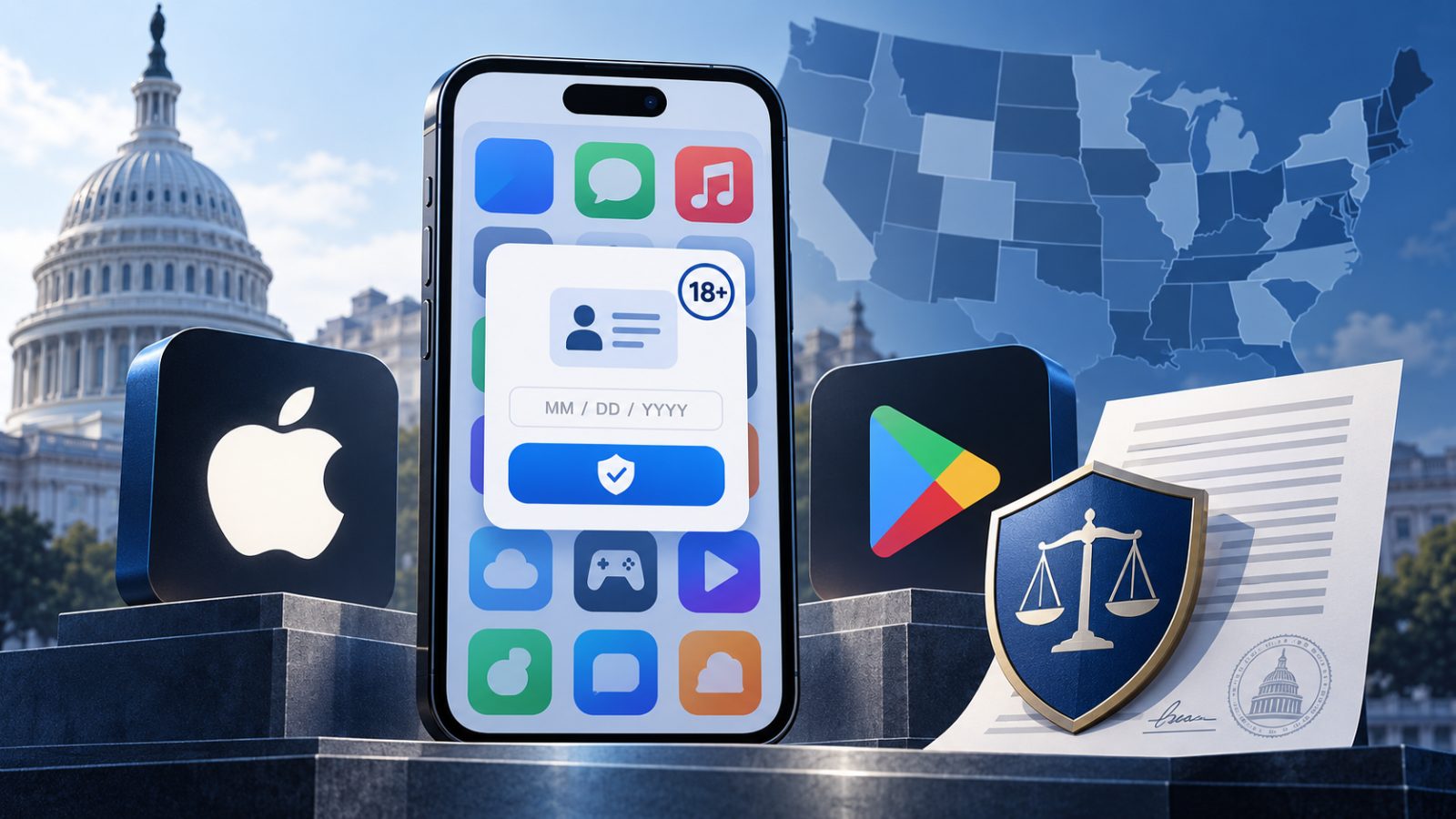
Apple and Google are pushing state lawmakers to back child-safety rules that would make app stores responsible for checking users’ ages while limiting the companies’ exposure to private lawsuits.
The lobbying drive comes as Washington remains stuck on protections for minors, leaving states to write rules. Draft bills, internal emails, and interviews with sources as alleged by Politico say that a previously unreported campaign to shape those proposals across the country before new requirements become a legal minefield.
Apple and Google want age checks without a flood of private lawsuits
The fight centers on the App Store Accountability Act, or ASAA. The proposal would require app stores to verify age, get parental approval before minors download apps or make purchases, and accept legal responsibility for violations.
Versions appeared this year in Georgia, Arizona, and Kansas. Lobbyists for Apple and Google responded with alternative language that would block individuals from suing the companies. Under that approach, enforcement would sit with state attorneys general.
That distinction matters because Big Tech is already facing hundreds of cases from users saying platform design harmed them or their children. New age-verification laws could create another path for claims, so the companies are trying to narrow who can sue and under what circumstances.
Some tech-safety advocates are pushing back, while Meta is lobbying in the opposite direction. It wants lawmakers to place the age-checking duty on app stores rather than social platforms, arguing that stores should confirm minors before age-restricted material becomes available.
Apple says it supports child protections but does not want safety rules to become a privacy trap. A company spokesperson said some proposals could force every person downloading an app to hand over sensitive data. Apple says it wants legislation that protects minors without turning downloads into identity checks for everyone.
Separate Apple and Google problems keep adding pressure elsewhere
Apple is also dealing with an iPhone issue. After complaints from iPhone 18 Pro Max owners, AT&T warned customers that devices were struggling with calls, text messages, and mobile data, and urged users to install an iOS update immediately. Apple later acknowledged the issue.
The awkward part is that iOS 27.0.1 does not list that connectivity bug among its fixes. Several affected users say installing the update did not solve the problem, leaving the official remedy still incomplete.
Google parent Alphabet, meanwhile, sent AI hardware into orbit Thursday aboard a SpaceX Falcon 9 rocket from Vandenberg Air Force Base in California. Liftoff happened after the 18:15 UTC launch window opened, and SpaceX said all payloads were deployed by 20:00 UTC
The uncrewed Transporter-18 mission carried Planet Labs satellites, including a solar-powered prototype fitted with Google tensor processing units. It is the first orbital test tied to Project Suncatcher, Google’s space-computing effort first announced in November 2025.
SpaceX has pitched orbital supercomputing as a way around land-based data-center limits, pointing to the vast space available above Earth. Google’s longer-term goal is continuous, solar-powered AI infrastructure operating in orbit.