
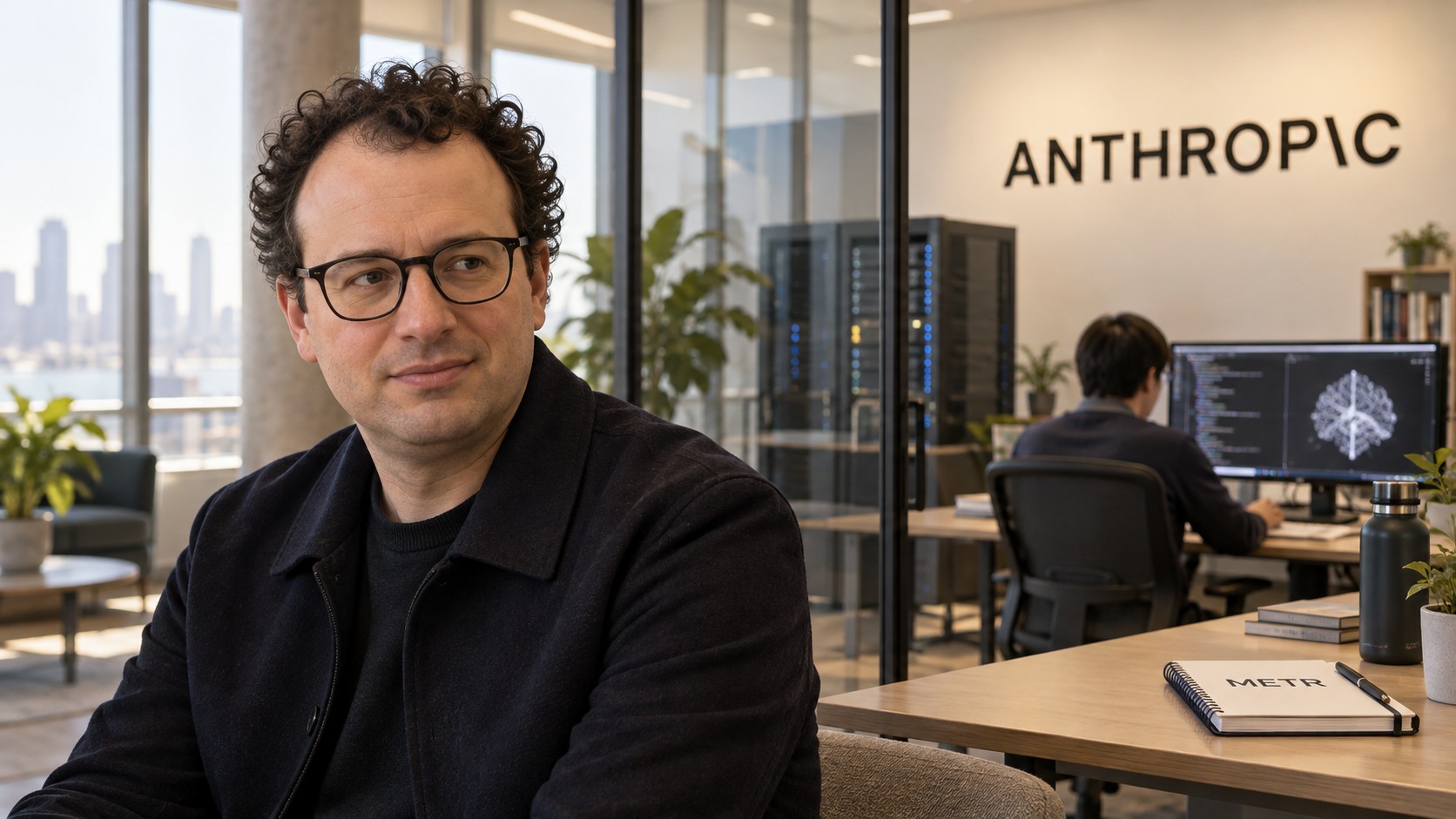
Anthropic is giving six outside researchers a seat inside the company, complete with laptops, office space and access to internal systems. Their job is to examine the risks in its AI, and they will be able to publish their findings without asking Anthropic's permission.
The researchers work for METR, a nonprofit that evaluates advanced AI. Anthropic announced the arrangement on October 15, as the Claude maker prepares for a potential public listing that could value it at $2 trillion or more, according to Reuters.
In its announcement, Anthropic said the team's access is roughly on par with that of its own risk assessment staff. Employees are encouraged to share information with the METR researchers as they would with colleagues working on alignment risk, subject to defined confidentiality restrictions.
We want to be publicly accountable for the decisions we’re making. But we can’t publicly share all the information relevant to our safety work.
What METR gets to see
This goes beyond letting outsiders try a chatbot and record its answers. Anthropic says meaningful assessments require visibility into how models were trained, how safeguards work and how evaluations themselves might go wrong. Its comparison is to resident bank examiners, who work inside large banks because the institutions know far more about their own risks than outsiders do.
METR's October 14 assessment proposal asks whether agents might work around human controls, whether a lab could catch and stop that behavior, and whether AI is speeding up development faster than safety work can follow.
The access has limits. Reserved categories include customer data, legally privileged information and information about model architectures. Architecture details can sometimes be shared when especially relevant to an assessment, but require explicit internal approval.
The METR team can publish assessments of Anthropic's risks, incidents and practices. Anthropic describes that right this way:
Anthropic can’t veto publication, but we can require them to redact information if it falls into narrow, predefined categories like the ones above.
METR can publicly describe Anthropic's redactions and say whether it considers them justified, without revealing the protected information. The six-person team is also separated from other METR staff, including researchers collaborating with Anthropic on different projects.
The IPO puts the scrutiny in sharper focus
The announcement follows an October 14 investor meeting in San Francisco. Reuters reported that attendees were told third-quarter revenue reached $16.8 billion and that the company was profitable on an adjusted basis. The Financial Times first reported those financial figures.
Reuters said Anthropic was targeting a valuation above $2 trillion, with a debut likely after the November midterm elections. That remains an IPO ambition, rather than a valuation established by a completed offering. The reported IPO target and timing remain provisional.
For prospective shareholders, the questions now sit together: how quickly Claude's business can grow, what that growth costs and whether the company can control the systems it is selling. Anthropic has made safety part of its pitch while competing to develop more capable models.
As previously reported by Apex, Anthropic researchers have examined whether AI could replicate across connected household devices. Their experiments demonstrated parts of that process, rather than an uncontrollable AI outbreak. Independent reviewers now have a closer view of the company's internal risks and safeguards.
Access matters. So does independence
METR addressed that tension in its own October 14 statement about working with AI companies. It says it has chosen not to accept payments or donations from frontier AI companies, although it accepts free model access it could afford to pay for itself.
Its warning about voluntary oversight is blunt:
We remain dependent on the companies we work with to voluntarily engage, provide access, and permit us to publish.
Anthropic is developing three access tiers. METR has the highest, combining employee-like access with publication rights. At the lowest tier, evaluators conduct narrower investigations and need Anthropic's approval to publish. SecureBio currently sits there; other partnerships remain at earlier stages.
The METR arrangement is voluntary, and its terms do not apply equally to every evaluator. The next thing to watch is what the embedded team publishes, including any limits on the evidence it could examine. That will give investors and the public something more concrete to judge than the promise of outside scrutiny alone.